

Conservatory roof insulation is a practical way to make a conservatory warmer in winter, cooler in summer, and quieter when it rains. It works by fitting insulated roof panels into the existing conservatory roof structure, creating a stronger thermal barrier between the indoor space and the weather outside.
For many homeowners, the problem is simple. The conservatory looks useful, but it rarely feels right. One week it feels like a greenhouse. A few months later, it feels too cold to sit in. That is where a properly fitted insulated roof for conservatory spaces can help.
In this article, we explore what conservatory roof insulation is, how it works, what affects cost, how it compares with tiled roof replacements, and why ComfiSpace’s COMFIBOARD system gives many homeowners the comfort they want with less hassle and at a fraction of the price of a full tiled roof.
What Is Conservatory Roof Insulation and How Does It Work?
Conservatory roof insulation is a home improvement that helps slow down heat transfer through the roof. It reduces heat loss during colder months and helps limit heat build-up when the sun hits the roof in summer.
Most older conservatories were built with glass panels or polycarbonate roof sheets. Those materials let in natural light, but they are not always great at temperature control. Heat can escape quickly in winter. In summer, the roof can allow too much solar heat into the room. That is why so many conservatories end up as a wasted space rather than part of the rest of your home.
A specialist insulation company will usually inspect the existing roof, check the frame, measure the panels, and fit an insulation system that suits the type of conservatory roof. At ComfiSpace, the aim is not to replace the whole conservatory roof in most cases. The company uses COMFIBOARD insulated panels designed to fit into the existing roof structure, with most installations completed in just one day.
So, what is conservatory roof insulation and how does it work in day-to-day life? It helps the room feel more stable, less exposed to the weather, and easier to use without the cost, weight, or disruption of a full tiled roof replacement.
Why Conservatories Get Too Hot, Too Cold, and Noisy
A conservatory has more glazing than most rooms in the house. That is part of its charm, but it is also part of the problem. Glass panels and older polycarbonate roofs react quickly to outside weather. On a sunny day, heat builds up fast. On a cold evening, warmth disappears just as quickly.
That is why roof insulation for conservatories is not just about warmth. It is about balance. A good system helps reduce heat loss, improve thermal performance, and soften rain noise. It also makes the space feel more stable, so the room is not fighting the weather all year.
Unlike a normal loft, a conservatory is not measured under the same neat set of official heat-loss rules. The UK does not have one reliable public benchmark for every conservatory roof because conservatories vary so much in age, roof type, glazing, size, shape, and build quality.
Based on ComfiSpace’s experience across 1,000+ conservatory upgrades, the roof is usually the biggest comfort problem. The working principle is simple: if around 93% of the energy is escaping through the conservatory roof, insulating that roof can capture around 80% of that loss, bringing the remaining roof loss down to around 13%.
That is the more useful way to think about conservatory insulation. The exact number will vary from home to home, but the homeowner result is what matters most: the room feels more comfortable from day one, less fierce in summer, less cold in winter, and much easier to use.
For homeowners in Sussex, Kent, and Surrey, this is often the real issue. The conservatory is not broken. It is just not built for year-round comfort.
What Roof Insulation for Conservatories Actually Does
Roof insulation for conservatories works by adding a barrier that slows heat movement. Instead of letting heat pass straight through the roof, the insulation helps hold warmth in winter and limits heat gain in summer. It can also reduce the drumming sound of rain on the roof.
| Conservatory Problem | What Insulation Does | What the Homeowner Feels |
| Too cold in winter | Reduces heat loss through the roof | The room holds warmth for longer |
| Too hot in summer | Limits heat transfer from direct sun | The room feels easier to use |
| Loud rain noise | Adds layers that soften impact sound | Less harsh roof noise |
| Condensation worries | Helps reduce cold roof surfaces when fitted correctly | A more stable indoor feel |
| Wasted living space | Makes the room more practical | The conservatory feels part of the home |
This is why conservatory roof insulation panels are often chosen by homeowners who want a more usable room without the disruption of a full replacement roof. The goal is not to turn a conservatory into a brick-built extension. The goal is simpler: make the existing conservatory more comfortable, more useful, and better suited to daily life.
If your room is too hot, too cold, draughty, or noisy, it helps to understand why conservatories get too hot and cold, as it breaks down the issue clearly and practically.
How Conservatory Roof Insulation Panels Are Installed
Every property is slightly different, so a proper survey matters. A lean-to conservatory will not have the same roof shape as a Victorian, Edwardian, P-shaped, or gable-ended design. The existing conservatory also has to be checked for leaks, frame strength, roof angle, and general condition.
The usual process starts with a roof assessment. The installer checks whether the existing roof can take the proposed insulation installation. Then the roof is measured, the panels are prepared, and the new insulated roof system is fitted into the structure. The installer then seals the roof, checks the finish, and leaves the room ready to use.
ComfiSpace keeps this process simple. Their how the roof upgrade works explains that customers get a quick chat, a free no-obligation visit and quote, then an installation date if they are happy to go ahead. Most jobs are completed in one day, with minimal disruption.
That one-day approach is one of the biggest reasons homeowners choose ComfiSpace. Many people do not want weeks of mess, heavy materials, scaffolding, or a major roof conversion. They want the conservatory fixed with the least possible hassle. COMFIBOARD is built around that idea: simple survey, clear quote, clean install, and in most cases, in and out in a day.
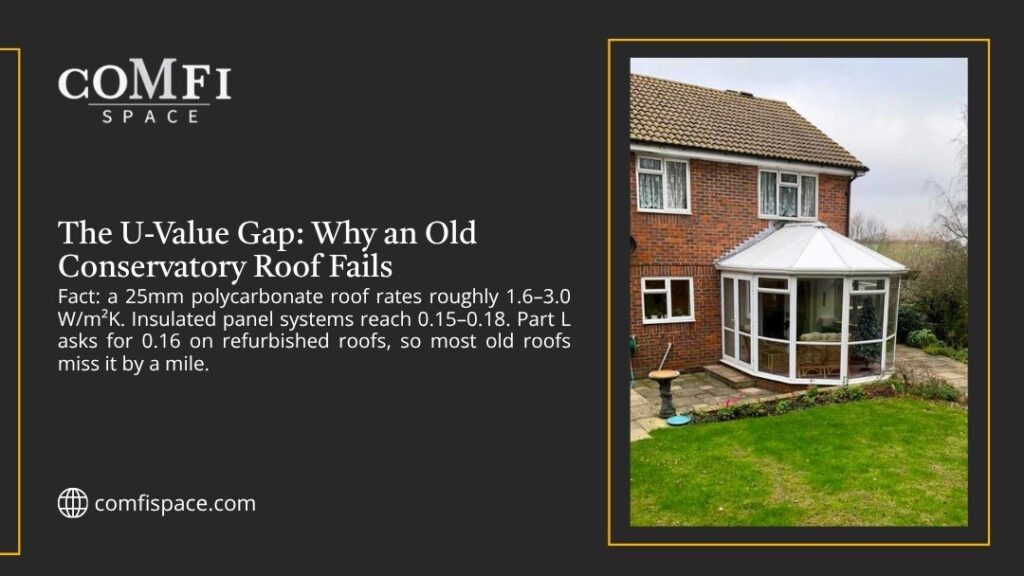
COMFIBOARD vs Tiled Roof Replacement vs DIY Insulation
A tiled roof or solid roof can work for some homes, but it is not always the smartest answer for a homeowner who simply wants the conservatory to feel comfortable again. It can cost more, take longer, and involve more disruption. It also should not be presented as the higher-performing insulation option.
When compared with a plastered ceiling with insulation under a tiled conservatory roof, COMFIBOARD delivers the same insulation value. The main difference is appearance and cost. A tiled roof changes the look. COMFIBOARD delivers the comfort for roughly half the price.
| Option | Best for | Main concern |
| ComfiSpace COMFIBOARD insulated panels | Homeowners who want the same comfort benefits as an insulated tiled-roof ceiling without the high cost or disruption | The existing roof must be suitable after survey |
| Tiled roof or solid roof | Homeowners who want a different external roof appearance | Usually not less than £12,000 plus VAT, around £14,400 including VAT, and often more depending on size and finish |
| Conservatory roof insulation kit | Small DIY attempts or temporary fixes | Fit, finish, and moisture control can be poor |
| Stick-on conservatory roof insulation | Budget short-term cover | Often less neat, less durable, and less suitable for a finished living space |
| Full replacement roof | Conservatories with serious roof damage | Bigger project, higher cost, and more disruption |
This is where ComfiSpace focuses on one clear service: upgrading conservatory roofs with insulated panels. The system is positioned as a no-nonsense alternative to heavy tiled roof systems because it does the comfort job without unnecessary cost, weight, and upheaval in many cases.
For a homeowner who simply wants to insulate a conservatory and use it more often, that message is easy to understand.
Can You Insulate a Conservatory Without Replacing the Whole Roof?
Yes, many conservatories can be insulated without replacing the whole roof. The existing roof and frame need to be suitable, but a full roof replacement is not always needed.
This is one of the most useful things to know when asking, what is conservatory roof insulation and how does it work? In many cases, the work is not about stripping everything back and starting again. It is about improving what is already there.
ComfiSpace explains that it upgrades the existing structure with insulated panels in the vast majority of cases. That can keep the project simpler and more affordable than a full roof rebuild. Still, a home visit is important. If the roof is leaking badly, sagging, damaged, or poorly fitted, those issues need to be dealt with before any insulation project begins.
The safest answer is this: yes, you can often insulate a conservatory without a full replacement, but the roof must be checked first.
Conservatory Insulation Cost: What Affects the Price?
Conservatory insulation cost depends on the size, shape, condition, and finish of the conservatory. A small lean-to roof will usually be more straightforward than a large P-shaped roof with awkward angles. A roof with leaks, damaged seals, or poor access may also need more work before insulation can be fitted.
It is tempting to search for a fixed conservatory roof insulation cost, but online averages can only go so far. A proper quote is more useful because every conservatory has its own structure, roof style, and access issues.
The most accurate price will always come from a home visit, not a rough online estimate. A local survey lets the installer check roof condition, access, panel size, and whether the existing structure is suitable before giving a fair quote.
For the fairest price, compare like-for-like quotes. ComfiSpace offers a price promise on genuine written quotes, so homeowners can check the value before they commit.
| Price Factor | Why It Changes the Cost |
| Roof size | Bigger roofs need more materials and labour |
| Roof shape | Victorian, Edwardian, and P-shaped roofs can take longer to measure and fit |
| Existing roof condition | Leaks, weak seals, or damaged panels may need attention |
| Chosen finish | Different internal finishes affect the look and price |
| Access around the home | Tight access can make the job slower |
| Installation type | COMFIBOARD panels, DIY kits, stick-on products, and tiled roofs vary widely in cost, finish, and disruption |
A cheap conservatory roof insulation kit from a DIY store may look appealing at first glance. Search terms like conservatory roof insulation, DIY insulated conservatory roof panels, and best stick-on conservatory roof insulation show that many homeowners look for quick fixes.
The problem is that conservatory roofs need proper fit, safe sealing, ventilation awareness, and a neat finish. A poor DIY job can trap moisture, leave gaps, or make the room look worse.
That is why a professional quote is usually the better starting point. ComfiSpace offers a free, no-obligation quote and gives clear advice before any work begins.
ComfiSpace also promotes a best-price guarantee, which gives homeowners extra confidence when comparing like-for-like conservatory insulation quotes.
Not sure whether your roof needs COMFIBOARD insulation or a bigger repair? Book a free local visit and let ComfiSpace check it properly before you spend money on the wrong fix.
Will Conservatory Roof Insulation Block Natural Light?
This is one of the biggest questions homeowners ask, and fair enough. A conservatory is meant to feel bright.
Roof insulation can reduce light from above because insulated panels are not clear like glass panels. That said, most conservatories still have large side windows and doors, so the room can remain bright. For many homeowners, the trade-off is worth it because the space becomes usable for more of the year.
The real question is what matters more: maximum roof light or a comfortable temperature. If the room is currently too hot in summer and too cold in winter, extra natural light may not be enough to make it useful. A bright room that nobody can sit in is still a wasted room.
Homeowners who care about light should ask about roof shape, side glazing, interior finish, and panel colour before they commit. ComfiSpace also has helpful advice on how to maximise conservatory light without losing efficiency.
Is Conservatory Roof Insulation Worth It?
Conservatory roof insulation is worth considering if the room is structurally sound but uncomfortable. If the roof leaks badly, the frame is weak, or the conservatory is already near the end of its life, a different option may be needed.
For the right home, though, the benefits are clear. Better temperature control means the room can be used more often. Less rain noise makes it feel calmer. A warmer winter space and cooler summer space can make the conservatory feel less separate from the rest of your home.
That is why ComfiSpace’s local focus works well. The company is not trying to be a national chain. It is a team of local Sussex, Kent, and Surrey specialists who focus on one thing: making conservatories usable again.
ComfiSpace also gives homeowners practical reassurance through its one-day installation approach, no-pressure advice, and insurance-backed guarantee. That mix is important because conservatory roof insulation is not a small online purchase. It is a home decision, and homeowners need to feel safe before they book.
If you want to see the difference this kind of upgrade can make, the recent conservatory roof projects are a useful place to start.
FAQs About Roof Insulation for Conservatories
What is conservatory insulation?
Conservatory insulation is any system that helps reduce heat loss, improve thermal performance, and make the room more comfortable. It can involve roof insulation, insulated panels, wall or floor improvements, or better glazing. For most homeowners, the roof is the first place to look because it has such a big effect on temperature.
Can you change your conservatory roof to a solid roof?
Yes, you can change many conservatory roofs to a solid roof, but it is a bigger project than a simple insulated roof upgrade. It usually costs more, takes longer, and changes the appearance of the conservatory. If your main goal is comfort rather than a full visual conversion, COMFIBOARD insulated panels may be the simpler and better-value option.
What is the best conservatory roof type?
The best conservatory roof type depends on your home, budget, and priorities. Glass gives more natural light, but it may struggle with heat and glare. A tiled roof can feel more like an extension, but it is heavier and usually more expensive. COMFIBOARD insulated conservatory roof panels offer a practical middle ground because they provide the same insulation value as a plastered insulated tiled-roof ceiling, but with less cost and less disruption.
Why is my roof insulation not working?
Roof insulation may not work well if it has gaps, poor seals, damp, blocked ventilation, weak materials, or bad installation. It can also disappoint if the windows, doors, or floor are still losing too much heat. A conservatory works as a whole space, so the roof is important, but it is not the only factor.
What is the best way to install insulation on a slanted roof?
For a conservatory, the best way is usually a professional survey and fitted system. Slanted roofs need accurate measurements, safe fixing, proper sealing, and care around ventilation. A DIY kit may look simple, but poor fitting can lead to problems later.
Are conservatory roof insulation panels better than a DIY kit?
For a long-term finish, professionally fitted conservatory roof insulation panels are usually a better choice than a DIY kit. A kit may be cheaper at the start, but a fitted system is more likely to look neat, perform properly, and suit the existing roof.
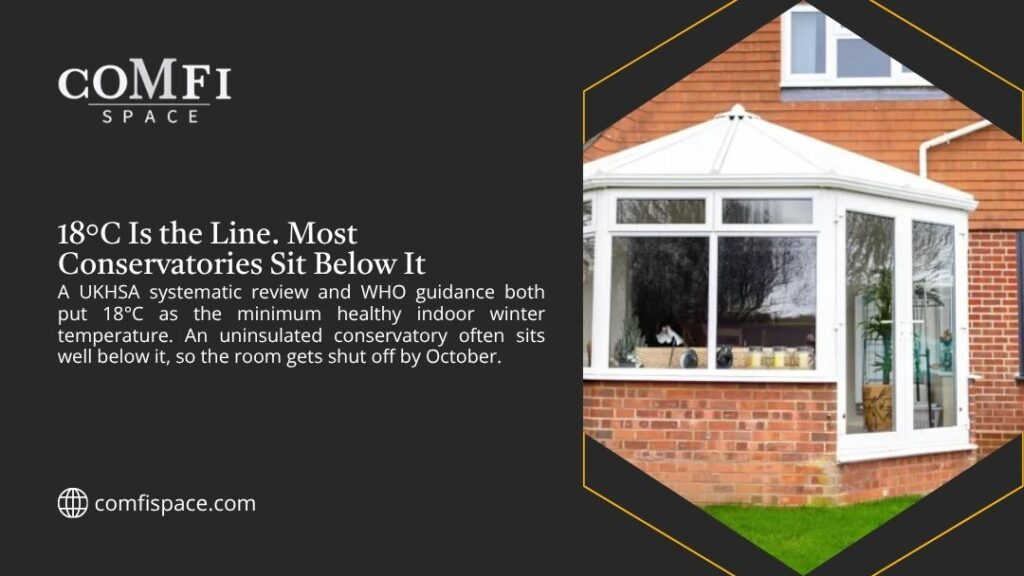
Make Your Conservatory Work Harder for Your Home
What is conservatory roof insulation and how does it work? It is a practical roof upgrade that helps slow heat loss, reduce summer heat build-up, soften rain noise, and make an existing conservatory feel more like a room you can use.
For homeowners across Sussex, Kent, and Surrey, ComfiSpace keeps the answer simple. You do not always need a full roof replacement. You may not need a heavy tiled roof. You may not need weeks of disruption. In many cases, a COMFIBOARD insulated roof panel upgrade can make the space warmer in winter, cooler in summer, and easier to enjoy all year, with most installations completed in just one day.
If the room has become a dumping ground, a laundry space, or a place nobody wants to sit, that is the real cost. A conservatory should give you more usable space, not another room you avoid.
The ComfiSpace approach is simple: no nonsense, no unnecessary rebuild, and no oversized project when a lighter insulated panel upgrade can do the job. It gives homeowners the comfort benefits they are looking for at roughly half the price of a tiled roof replacement.
If your conservatory is too hot, too cold, noisy, draughty, or simply left unused, it is worth getting honest advice before you spend money on the wrong fix. Speak to ComfiSpace and book a free local visit to find out whether your conservatory can be upgraded quickly, cleanly, and affordably.