

If your conservatory is freezing in winter, it is usually losing heat through the roof, old roof panels, glass, draughty windows and doors, or poor insulation. In this article, we explore why this happens, what quick fixes can help, and when a proper conservatory roof insulation upgrade is the better long-term answer for homes in Sussex, Kent and Surrey.
Why Is My Conservatory So Cold in Winter?
If you keep asking, “Why is my conservatory so cold in winter?”, here’s the thing: the room was probably built for light, not warmth.
For many homeowners across Sussex, Kent and Surrey, the conservatory looks like a useful space on paper but feels too cold to enjoy once winter sets in. A traditional conservatory has more glass, more roof exposure, and less insulation than a normal room. That means warmth escapes fast.
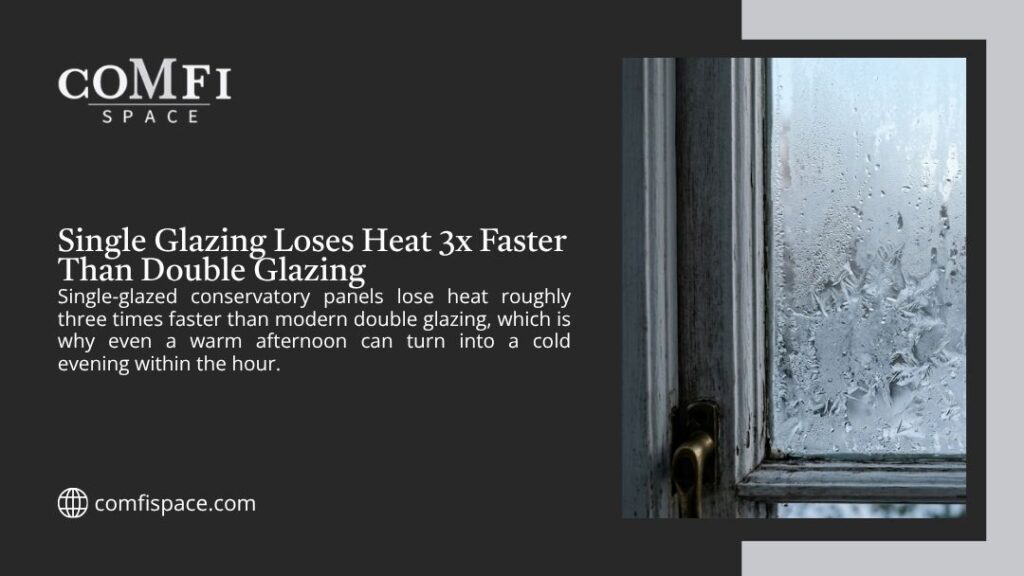
Heat rises through the conservatory roof. Cold air finds weak seals. Large glass areas lose warmth more quickly than insulated walls. So even if the rest of the house feels cosy, the conservatory can still feel like a separate cold box.
That does not mean you always need a full rebuild. In many homes, the best fix is to reduce heat loss first, especially through the roof. Once the room can hold warmth better, heating a conservatory becomes far more effective.
The Energy Saving Trust makes the point clearly: “A typical uninsulated home loses about 25% of heat through the roof.” Your conservatory is not a loft, of course, but the principle matters. When the roof is the weak point, heat has an easy way out.
Where Your Conservatory Loses Heat
Most cold conservatories do not have a single fault. They usually have a few weak spots working together. The roof may be thin. The seals may be tired. The floor may feel icy. The windows and doors may let in cold air.
| Cold spot | What is happening | What you notice |
| Conservatory roof | Heat rises and escapes through older glass, polycarbonate, or weak roof panels. | The room warms up, then cools down again fast. |
| Windows and doors | Old seals or gaps let cold air in and warm air out. | Draughts near corners, frames, and handles. |
| Floor | Tiles, stone, or laminate can feel cold, especially over a poorly insulated base. | Your feet feel cold even when the heater is on. |
| Internal doors | If the conservatory is open to the house, cold can spread inside. | The next room feels colder, too. |
| Heating setup | A heater adds warmth, but poor insulation lets it escape. | Higher energy bills with little comfort. |
This is why more heat is not always the answer. Heat only helps when the room can keep hold of it.
The Conservatory Roof Is Usually the Biggest Problem
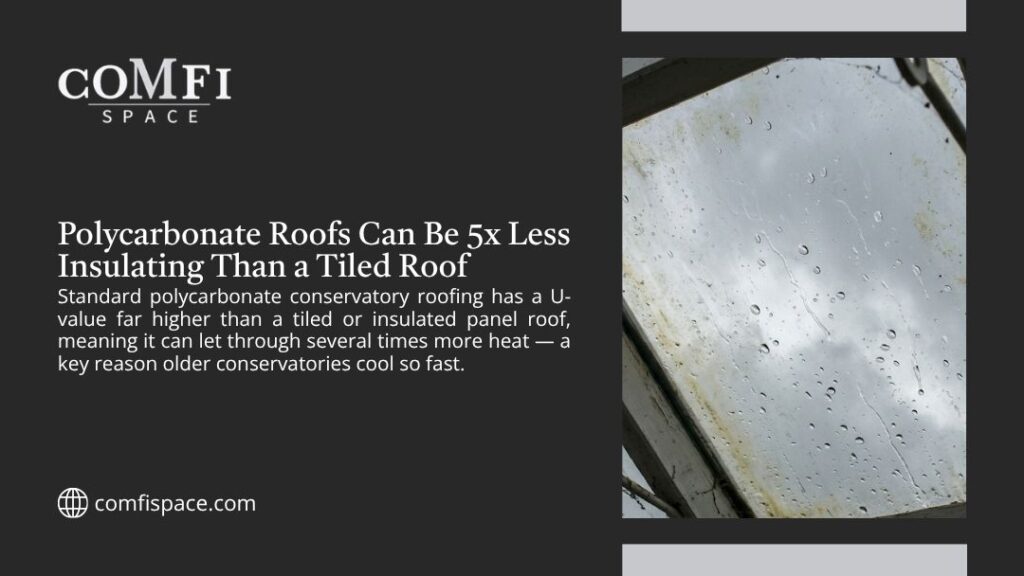
In many homes, the conservatory roof is the main reason the room feels cold. Older glass roof systems and polycarbonate roof panels were often fitted to bring in natural light, not to keep the room warm through winter.
That is fine in mild weather. But in January, it can be a problem. Warm air rises. If the roof has poor insulation, the room loses warmth quickly. You are not just trying to heat a conservatory. You are trying to heat a space that keeps letting the warmth escape.
This is also why small fixes only go so far. Thermal blinds can help. Rugs can help. Draught-proofing can help. But if the conservatory roof is still the weak point, the room may never feel properly comfortable.
For a simple explanation of this year-round problem, ComfiSpace explains why conservatories often become too warm in summer and too cold in winter.
Quick Fixes Can Help, But They Have Limits
Some quick fixes can make a cold conservatory feel better for occasional use. Heavy curtains can reduce draughts around doors. Thermal blinds can add a small barrier across the glass. A thick rug can make the floor feel less harsh. Seal repairs can stop cold air from sneaking in around windows and doors.
| Fix | Best for | Limitation |
| Thermal blinds or curtains | Reducing cold spots around glass and doors. | They do not insulate the roof itself. |
| Rugs or warmer flooring | Making the floor feel less cold. | They will not stop major roof heat loss. |
| Draught-proofing | Sealing small gaps around windows and doors. | Failed panels or old frames may still need expert work. |
| Electric radiators | Short bursts of warmth. | Running costs can rise if heat escapes quickly. |
| Roof insulation upgrade | Long-term comfort and year-round use. | Needs a proper survey and professional fitting. |
If your conservatory is freezing every winter, the long-term solution is usually to reduce heat loss first, then choose the right way to heat the room.
Heating a Conservatory Before Insulation Can Waste Money
It is tempting to buy a bigger heater. Many homeowners try electric radiators, portable heaters, underfloor heating, or changes to central heating.
Those options can help in the right room. But if the conservatory is poorly insulated, you may be paying to heat cold air and roof panels. The heater works hard, the room feels warm for a short time, then the heat disappears.
That is why the order matters. First, make the conservatory warmer by reducing heat loss. Then think about heating.
Energy-efficient glazing can also help reduce heat loss, draughts, cold spots, noise, and condensation. That matters because a cold conservatory often has more than one problem at once. It may feel cold, noisy in the rain, and damp around the windows.
Do Building Regulations Matter When You Heat a Conservatory?
Yes, they can. This is especially important if you plan to connect the conservatory to central heating or open it up to the rest of the house.
The Planning Portal guidance on conservatories says conservatories are usually exempt from building regulations only when key conditions are met. These include separation from the house by external-quality doors, walls, or windows, and an independent heating system with separate controls.
That does not mean every small improvement needs approval. But it does mean you should be careful before removing internal doors, extending central heating, or treating the conservatory like a full extension. If you are not sure, ask a qualified local expert or building control before work starts.
The Best Way to Make a Conservatory Warmer
The best way to make a conservatory warmer in winter is to deal with the weakest part of the room. In many older conservatories, that means the roof.
An insulated roof panel upgrade can help because it targets the area where warm air is most likely to escape. Instead of replacing the whole conservatory, the existing roof panels can often be removed and replaced with insulated panels that fit into the current structure.
ComfiSpace explains the process in its simple conservatory roof upgrade. The team checks the conservatory, explains the options, gives a clear quote, and upgrades the roof with minimal disruption.
This is where ComfiSpace stands out. The company has upgraded 1,000+ conservatories, offers free no-obligation quotes, has a no hard sell promise, provides an insurance-backed guarantee, and completes most installations in just one day.
If your conservatory is too cold to use, you do not need to guess what the problem is. You can book a free local survey, speak to a local expert, and find out whether an insulated roof panel upgrade is suitable for your home.
That matters for homeowners who want a cost-effective fix without a long, messy building project. A tiled roof can work for some homes, but it can also add weight, cost, and complexity. ComfiSpace positions its insulated panel system as a lighter alternative to heavy tiled roof systems, designed for many existing conservatory structures.
You can also learn more about what Comfiboard is. The main point is simple: the aim is a conservatory that feels warmer in winter, cooler in summer, quieter in bad weather, and useful again.
Which Fix Is Right for Your Conservatory?
The right fix depends on how cold the room feels and how you want to use it.
| Your situation | What might work | Best next step |
| Slightly chilly on winter evenings | Draught-proofing, rugs, thermal blinds, and a small heater. | Try low-cost comfort fixes first. |
| Cold most of the winter | Better seals, roof check, and insulation upgrade. | Find out where the heat is escaping. |
| Too cold in winter and too hot in summer | Insulated roof panels or a wider roof upgrade. | Focus on the conservatory roof first. |
| You want daily year-round use | Roof insulation plus suitable heating. | Get a professional survey before spending more on heating. |
| You are unsure what the roof can support | Local expert visit. | Ask for clear advice before choosing a system. |
If the room sits empty from November to March, the issue is not just comfort. It is lost value. You already have the space. It should not be wasted for half the year.
Why This Matters for Homes in Sussex, Kent and Surrey
Conservatories across Sussex, Kent and Surrey often face the same problem. They can become too hot in summer and too cold in winter. That is frustrating if you want to use the room as a dining space, playroom, home office, garden room, or quiet place to relax.
ComfiSpace is a local company with one clear focus: helping homeowners turn uncomfortable conservatories into usable living spaces. A local visit helps because every conservatory is different. The roof shape, age, frame condition, direction, and current panels all affect the best solution. A proper look gives a better answer than guesswork.
Can You Keep Natural Light After Insulating a Conservatory Roof?
Yes, but it depends on the upgrade you choose. A fully solid tiled roof may reduce overhead natural light unless roof windows are added. An insulated panel system can also reduce some overhead light, but it may make the room much more comfortable and easier to use.
The better question is not only “how much light will I keep?” It is “how often will I actually use this room?” A bright conservatory that is freezing in winter and boiling in summer is not giving you much value.
ComfiSpace also explains how to maximise conservatory light without losing efficiency, which is useful if you are worried about making the room feel too dark.
Will Conservatory Roof Insulation Help Energy Bills?
It can help reduce wasted heat, but exact savings depend on the home. The size of the conservatory, roof type, glazing, draughts, heating habits, and how often you use the room all matter.
What roof insulation can do is help reduce heat loss through the conservatory roof. That means the room should feel easier to warm and less punishing to use in colder months.
If you already run heaters for long periods and the room still feels cold, cutting heat loss is the sensible place to start. This is where conservatory roof insulation can lower energy bills, as improved insulation helps retain heat more effectively.
FAQs
Why is my conservatory so cold in winter, even with heating on?
Your conservatory is probably losing heat faster than the heater can replace it. Older roof panels, a glass roof, weak seals, and large glazed areas can all let warmth escape quickly. In that case, a bigger heater may not solve the real problem. You need to reduce heat loss first.
How do I make a conservatory warmer without a full rebuild?
Start with draught-proofing, thermal blinds, rugs, and door checks. If the room is still too cold, look at the conservatory roof. In many homes, replacing old roof panels with insulated panels can make a much bigger difference than adding another heater.
Is heating a conservatory expensive?
It can be expensive if the conservatory is poorly insulated. Electric radiators and plug-in heaters can work for short use, but running costs can rise if the room leaks heat. A better long-term answer is to improve insulation first, then choose a suitable heat source.
Can I connect my conservatory to central heating?
You should check before doing this. Building regulations may apply if the conservatory is no longer separated from the main house or if the home’s heating system is extended into the conservatory. Ask building control or a qualified local expert before making that change.
Is an insulated roof better than a tiled roof?
It depends on your home, budget, and structure. A tiled roof can work well, but it may involve more weight, cost, and disruption. An insulated roof panel system can be a simpler and more cost-effective option where the existing conservatory structure is suitable.
Will roof insulation stop condensation?
It can help reduce cold surfaces that contribute to condensation, but ventilation and humidity still matter. If the room has poor airflow or too much moisture, condensation may still appear. The truth about condensation in conservatories highlights how managing airflow and moisture levels is just as important as addressing surface temperatures.
Make Your Conservatory Useful Again
If you keep wondering why is my conservatory so cold in winter, the real issue is probably heat loss, not a lack of effort. You can add more heat, more blankets, and more temporary fixes, but the room will stay uncomfortable if the roof, windows, doors, or panels cannot hold warmth.
A simple insulated conservatory roof upgrade can help make the room warmer in winter, cooler in summer, quieter in bad weather, and far more useful day to day.
ComfiSpace helps homeowners across Sussex, Kent, and Surrey upgrade their conservatory roofs with insulated panels, usually without a full roof replacement. Book a free quote, speak to a local expert, ask about the no hard sell promise, and check the like-for-like best price guarantee before you decide.
If your conservatory has become a wasted space, book a free local conservatory survey today and find out whether ComfiSpace can make it comfortable again.