

If your conservatory roof has water droplets on the inside, the usual cause is warm, moist air hitting a cold surface. In many older conservatories, the roof cools down quickly, especially in winter. Once moisture in the air touches that cold roof panel or glass, it turns into water and may drip onto the floor, furniture, or windowsills.
For homeowners in Sussex, Kent and Surrey, this is often the first sign that the conservatory roof is not doing its job properly. The room may still look fine, but it feels cold, damp, and hard to use. ComfiSpace helps fix that with a simple insulated roof panel upgrade, usually completed in just one day, without a full roof replacement.
The good news is that condensation is common. The bad news is that it can point to poor insulation, weak air flow, excess moisture, or sometimes a real roof leak. Here’s how to tell the difference.
In this article, we explore why your conservatory roof is dripping condensation, how to tell if it is actually a leak, what you can do today, and when a ComfiSpace insulated roof upgrade may help.
Why Is My Conservatory Roof Dripping Condensation?
Your conservatory roof is dripping condensation because warm air inside the room is meeting a cold surface on the roof. That cold surface may be glass, polycarbonate, aluminium bars, or an older roof panel with poor insulation. When the air cools, it can no longer hold the same amount of moisture. The moisture turns into droplets, builds up, and then drips.
This is why the problem often feels worse on cold mornings. Overnight, the conservatory roof gets cold. If the room still has moisture in the air from heating, people, plants, pets, drying clothes, or open doors from the house, that moisture has somewhere to settle.
The Energy Saving Trust says a typical household can produce up to 100 litres of moisture a week through everyday life, including cooking, showers, kettles, and breathing. If that moisture is not removed through ventilation, it can stay in the air or build up on surfaces.
And here’s the thing: condensation does not always mean your roof is broken. But if the roof drips after rain, appears in one fixed spot, or leaves brown marks, then you may not have condensation at all. You may leak.
| What you see | Likely cause | What it usually means |
| Water droplets spread across the inside of the conservatory roof | Condensation | Warm, moist air is hitting a cold surface |
| Drips only after heavy rain | Leak | Sealant, flashing, guttering, or panels may need repair |
| Water inside the roof bars or around one joint | Possible leak or failed seal | The roof needs a closer check |
| Misty windows and roof droplets in winter mornings | Condensation | Poor air flow, excess moisture, or cold surfaces |
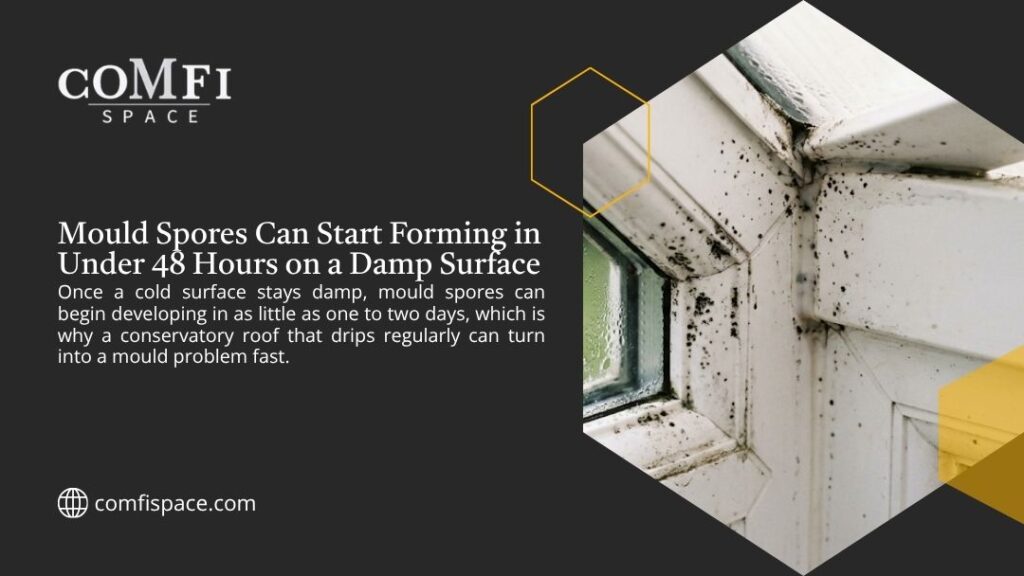
| Black mould around corners or window seals | Ongoing condensation | Humidity is too high, and the room needs attention |
| Dripping gets worse when drying clothes indoors | Excess moisture | Laundry is adding moisture to the air |
For many homeowners in Sussex, Kent and Surrey, this is exactly where a ComfiSpace roof upgrade can help: it tackles the cold roof surface without turning the job into a full roof replacement.
Condensation in your conservatory often starts with a simple temperature problem. Traditional conservatories were built to bring in light, not always to hold warmth. A glass or polycarbonate roof can lose heat quickly. So even if the room feels warm for a short while, the roof surface may still be cold enough for condensation to form.
This is also why quick bursts of heat can make things worse. A portable heater warms the air fast, but if the roof panels stay cold, the warm air carries moisture up to the roof, and the droplets appear again. Warm air rises, so the roof often takes the hit first.
Poor air flow adds to the issue. When windows stay closed all day, and trickle vents are blocked, moisture has no escape route. A conservatory may feel sealed, but sealed does not always mean healthy. You need controlled ventilation, not a draughty room.
GOV.UK warns: “Damp and mould within the home can produce allergens, irritants, mould spores and other toxins that are harmful to health.” That is why regular dripping should not be ignored, even if it starts as a small winter nuisance.
Is It Condensation or a Conservatory Roof Leak?
A roof leak normally follows the weather. Condensation follows temperature, humidity, and air flow. If your conservatory roof drips on a dry but cold morning, condensation is more likely. If it drips during rain or just after rain, check for a leak.
Look at where the water appears. Condensation usually forms across larger cold surfaces, such as roof panels, glazing, or inside window areas. A leak often appears in a narrow place, such as one joint, one roof bar, one corner, one vent, or the point where the conservatory meets the house wall.
The smell can help too. Condensation tends to leave a damp, musty feel over time. A leak may leave stains, peeling paint, damp plaster, swollen trims, or water marks that get darker after storms.
| Question to ask | Condensation is more likely if… | A leak is more likely if… |
| Does it happen when it has not rained? | Yes | No |
| Does it appear on cold mornings? | Yes | Sometimes |
| Is it spread across roof panels or windows? | Yes | Not usually |
| Is it always in one exact spot? | Not usually | Yes |
| Does it get worse during heavy rain? | Not usually | Yes |
| Are gutters blocked or overflowing? | Maybe, but not the main cause | Very possible |
| Is there mould near cold corners? | Yes | Sometimes |
If you are still unsure, dry the inside of the roof at night, keep the room ventilated, and check it again in the morning before rain. If droplets come back across the roof, that points to condensation. If a drip appears from one joint after rain, ask a roof specialist to inspect it.
Common Reasons Your Conservatory Roof Drips Inside
Cold roof panels are the main reason. Older polycarbonate and glass roofs often allow heat to escape fast. The inside surface becomes a cold surface, and moisture lands there. Once the droplets join together, they drip.
Too much moisture in the air is another common cause. Drying clothes in the conservatory, keeping lots of plants in the room, using it as a utility space, or leaving the door open from a warm kitchen can all add excess moisture. Even normal breathing adds moisture when the space is closed for hours.
Poor ventilation makes the problem stick around. Opening windows for a short spell can help, but many homeowners keep the conservatory closed in winter because the room already feels cold. That makes sense, but it traps damp air.
Uneven heat can also cause trouble. A room that is freezing overnight and then warmed fast in the morning creates the perfect setting for condensation. The air warms before the roof does. That temperature gap is where the water forms.
Old seals, blocked gutters, and tired roof vents can confuse the picture. Sometimes homeowners think the roof is dripping condensation when rainwater is entering through a failed seal or roof vent. If the water appears during rain, do not treat it as normal condensation until the roof has been checked.

How to Stop Condensation in a Conservatory Roof
To stop condensation, you need to reduce moisture, improve air flow, and make the inside surfaces warmer. One small fix may help, but the best result often comes from using all three together.
Start with moisture control. Avoid drying clothes in the conservatory, especially in winter. If you must dry clothes indoors, use a dehumidifier and keep some ventilation open. Move large numbers of plants out during colder months if the room feels damp. Wipe down wet windows and roof areas so the water does not sit there all day.
Next, improve air flow. Keep trickle vents open where possible. Open windows for short periods during the day, even for five to ten minutes, to let damp air escape. A roof vent can also help warm, moist air leave the space before it settles on the roof.
Then look at heat. A steady, low level of warmth is usually better than short, sharp blasts of heat. Sudden heat can put more moisture into the air while the roof is still cold. Gentle heat, paired with ventilation, helps reduce humidity without making the room feel stuffy.
Condensation catchers and moisture absorbers can help in small areas. They absorb moisture and may reduce mild dampness around window boards or corners. But they are not a cure for a cold conservatory roof. If the whole roof drips, condensation catchers will only do so much.
A dehumidifier is stronger. It can reduce humidity and help stop condensation from forming as heavily. This can be useful in winter, after wet weather, or when the conservatory is used every day. Still, if the roof surface remains cold, the problem may return when the dehumidifier is off.
| Fix | Best for | Limit |
| Opening windows for short periods | Light condensation and stale air | Less practical in very cold weather |
| Keeping trickle vents clear | Daily background air flow | May not be enough alone |
| Using a roof vent | Warm, moist air near the roof | Needs the right setup |
| Dehumidifier | High humidity and winter damp | Uses electricity and needs regular use |
| Condensation catchers | Small corners and window ledges | Not enough for a dripping roof |
| Avoiding drying clothes indoors | Excess moisture | Needs a different drying space |
| Roof insulation | Cold roof surfaces and year-round comfort | Needs a professional survey |
How to Stop Window Condensation in Winter
Window condensation in winter is caused by the same basic problem as roof condensation. Warm air meets cold glass, and water appears. If you have condensation on the inside of windows in house areas as well as the conservatory, the whole home may have too much moisture or not enough ventilation.
To reduce it, keep internal doors open when practical, use extractor fans in bathrooms and kitchens, and do not push furniture tight against cold walls. Try to keep rooms at a more stable temperature rather than letting them swing from very cold to very warm.
In the conservatory, the window issue can feel worse because there is so much glass. Even good habits may not solve it if the roof and glazing remain very cold. That is why homeowners often notice both misty windows and dripping roof panels at the same time.
Can Roof Insulation Reduce Condensation in a Conservatory?
Roof insulation can help reduce condensation by making the inside roof surface warmer, but it still works best alongside good ventilation and sensible humidity control.
That matters because insulation does not remove moisture from the air. It tackles one of the main causes: the cold conservatory roof. If the surface is warmer, condensation is less likely to form as heavily.
For many homeowners, this is the point where the room changes from a seasonal glass box into a space they can use more often. A better-insulated roof helps keep heat in during winter and helps reduce excess heat in summer. It can also cut down rain noise, which is another common complaint with older conservatory roofs.
ComfiSpace explains its simple conservatory roof upgrade process as a quick chat, a free, no-obligation visit and quote, and then a roof upgrade with no hard sell. The system is designed to upgrade the existing structure in most cases, rather than replace the whole roof. That matters if you want less mess, less disruption, and a more direct fix for a conservatory that feels cold, damp, or wasted.
ComfiSpace also offers an insurance-backed guarantee for peace of mind, and most installations are completed in just one day. If you want to understand the insulated panel itself, ComfiSpace explains what Comfiboard is and how it works. For a deeper look at the same moisture problem, their guide to condensation in conservatories is a useful next read.
Why Older Conservatories Suffer More
Older conservatories often have lightweight roofs, lots of glazing, and limited ventilation. They may look bright and airy, but they can lose heat quickly. In winter, that makes the inside roof surface cold. In summer, the same room may trap heat and feel uncomfortable.
This is why an existing conservatory can be too cold, too hot, and damp at different times of the year. The root problem is usually poor temperature control. Moisture then makes the problem more visible.
Many homeowners try blinds, heaters, towels, anti-mould sprays, or moisture pots first. Those can help for a while. But if the conservatory roof keeps dripping condensation, the room may need a more permanent upgrade.
ComfiSpace focuses on this exact issue for homeowners across Sussex, Kent and Surrey. Their local conservatory roof specialists’ position is important because conservatories across the South East often face the same mix of winter damp, summer heat, and changeable weather.
When You Should Call a Local Conservatory Roof Expert
You should call a specialist if the roof drips often, the room smells damp, mould keeps coming back, or you cannot tell whether the water is condensation or a leak. You should also get help if the water appears around electrics, light fittings, roof vents, or the wall where the conservatory joins the house.
A professional can check whether the issue is caused by cold roof panels, poor seals, blocked gutters, failed flashing, or weak ventilation. That matters because the wrong fix wastes money. A dehumidifier will not repair a leak. Sealant will not solve a cold roof. New blinds will not remove excess moisture from the air.
If you are based in Sussex, Kent or Surrey, speaking to a local conservatory roof expert can save you from guessing. ComfiSpace can check whether your roof is suitable for an insulated panel upgrade and explain the options clearly, with no pressure and no hard sell.
Make the Room Dry, Warm and Useful Again
So, why is my conservatory roof dripping condensation? In most cases, it is because warm, moist air is hitting a cold roof surface. Poor insulation, limited air flow, drying clothes, cold glass, and sudden heating can all make the problem worse. But if the drip follows rain or stays in one fixed spot, do not rule out a leak.
Start with the simple steps: reduce humidity, keep air moving, avoid drying clothes in the room, and check for obvious leaks. If the roof still drips, the problem is probably deeper than day-to-day moisture.
For homeowners in Sussex, Kent and Surrey, ComfiSpace offers a local, simple and effective way to make an uncomfortable conservatory usable again. You can request a free no-obligation visit, ask whether your conservatory can be upgraded without a full roof replacement, and use the ComfiSpace price promise, which guarantees to beat any like-for-like quote by at least 5%.
Call 07843 876342 or speak to ComfiSpace today to get clear advice from a local expert and turn your conservatory back into a room you actually want to use.