

Most professionally fitted conservatory roof insulation can last around 20 to 30 years, but the real answer depends on the condition of your existing roof, the insulation system used, the quality of the fit, and how well the roof is protected from leaks and condensation.
For many homeowners, that makes it a long-term home improvement rather than a quick fix. If your conservatory is hot in summer, cold in winter, noisy when it rains, or simply left empty for half the year, the right roof insulation can help turn it into a proper living space again.
In this article, we explore how long conservatory roof insulation lasts, what can shorten its lifespan, how ComfiBoard compares with other roof options, and why a simple roof upgrade can often give homeowners the comfort they want without the cost or disruption of a full replacement.
How Long Does Conservatory Roof Insulation Last?
So, how long does conservatory roof insulation last in a normal UK home? In many cases, a professionally installed system can last around 20 to 30 years. Some systems may need attention sooner if the original roof is already tired, leaking, or badly sealed. Others can keep their thermal performance for decades when the roof is sound, and the installation is done properly.
That is the honest answer. Conservatory roof insulation is not magic, and it should not be sold as one. It works best when the existing conservatory is suitable, the panels are fitted neatly, and damp is kept out. If those three things are right, insulation can be a reliable long-term upgrade.
For homeowners in Sussex, Kent and Surrey, ComfiSpace’s local conservatory roof upgrade service is built around this exact problem. Their team upgrades existing conservatory roofs with insulated panels, usually without a full roof replacement, so the room feels warmer in winter, cooler in summer, and easier to use through the year.
ComfiSpace has upgraded more than 1,000 conservatories, offers an insurance-backed guarantee, and works as a local specialist rather than a national chain, which gives homeowners extra peace of mind before they book a survey.
Here’s the thing: the lifespan is not only about the insulation panel. It is also about the roof it sits within. A new insulation system fitted into a damaged, leaking, or unstable roof will never perform as well as one fitted into a structure that has been checked first.
| Lifespan Factor | Why It Matters | What It Means for the Homeowner |
| Existing roof condition | Leaks, weak seals, and old panels can reduce performance | The roof should be assessed before work starts |
| Installation quality | Gaps and poor fitting can lead to draughts or moisture | A professional fit protects the long-term result |
| Moisture control | Damp can damage insulation and reduce comfort | Leaks and condensation should never be ignored |
| ComfiBoard suitability | ComfiBoard works best when the existing conservatory roof is suitable for a clean insulated panel upgrade | A survey helps confirm whether the room can be improved without turning the job into a full replacement project |
| Maintenance | Simple checks can extend the life of the system | Clear gutters, sound seals, and early repairs all help |
ComfiSpace uses its insulated ComfiBoard roof panel system to upgrade existing conservatory roofs without turning the job into a major build. For many homeowners, that is the point: ComfiBoard is designed to deliver the comfort benefits people expect from an insulated roof, while avoiding the heavier look, higher cost, and extra disruption of a tiled conservatory roof.
What Affects the Lifespan of Conservatory Roof Insulation?
The biggest mistake homeowners make is asking only for the lifespan number. A better question is: what will make the insulation last in this conservatory?
A conservatory is different from the main part of the house. It often has more glass, more exposed roof area, and greater temperature swings. On a bright day, it can feel like a greenhouse. On a cold evening, the heat disappears fast. That constant shift from warm to cold puts pressure on roof systems, seals, and insulation layers.
The quality of the installation matters just as much as the product. If the insulation is cut poorly, fitted with gaps, or sealed without proper care, it may not give the comfort the homeowner expected. It can also make condensation worse if moisture has nowhere to go.
That is why a proper survey matters. ComfiSpace’s process starts with a free, no-obligation visit and quote, where the roof can be checked before any advice is given. You can also learn how the ComfiSpace roof upgrade works through their process.
The Condition of Your Existing Conservatory Roof
Your existing conservatory roof plays a major role in how long conservatory roof insulation lasts. If the roof is already leaking, moving, or showing signs of wear, the insulation may still help, but the roof issue needs attention first.
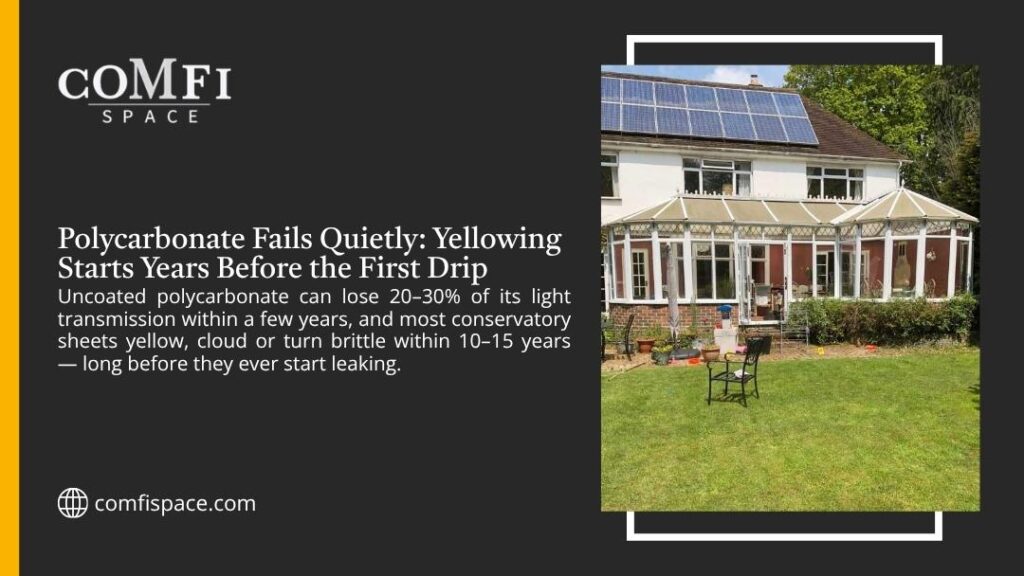
Polycarbonate roofs are common on older conservatories. They are light and affordable, but they can become noisy, discoloured, and poor at holding heat over time. Glass conservatory roofs often look brighter and cleaner, but they can still suffer from glare, heat gain, failed seals, and condensation. Some homes with glass roofs look lovely on paper, yet the space is not comfortable enough for daily use.
A tiled conservatory roof can also improve comfort, but it is not the only way to get an insulated roof. ComfiBoard is designed to give the same practical comfort outcome homeowners want from an insulated roof, without making them pay for a more expensive appearance-led replacement.
| Existing Conservatory Roof Type | Common Problem | How It Can Affect Insulation Lifespan |
| Polycarbonate roofs | Heat loss, noise, leaks, ageing panels | The system needs careful fitting and a sound roof base |
| Glass conservatory roofs | Glare, solar heat, failed seals, cold evenings | Insulation can help comfort, but seals should be checked |
| Older roof systems | Draughts, condensation, movement | A survey helps decide whether insulation is suitable |
| ComfiBoard insulated roof panels | Designed to improve comfort while keeping the upgrade simple | A strong long-term option when the existing conservatory is suitable |
| Tiled conservatory roofs | Higher cost and added weight in some cases | May last well, but not always needed for comfort |
This is where ComfiSpace is not trying to sell every homeowner a heavy replacement conservatory roof. Their message is simpler: in most cases, the existing structure can be upgraded with insulated panels, which keeps the work cleaner, quicker, and more cost-effective.
Moisture, Leaks, and Condensation
Moisture is the enemy of long-term roof insulation. If water gets behind panels, settles in gaps, or sits inside roof layers, performance can drop. Damp can also lead to staining, smells, and damage that a homeowner may not spot straight away.
Condensation is another issue. Many conservatories have large temperature differences between the inside and outside. Warm indoor air meets cold roof surfaces, and water forms. Insulation can help reduce condensation by improving thermal performance, but it still needs good airflow and proper fitting.
If you already see drips, damp patches, black marks, or a musty smell, do not treat insulation as a plaster over the problem. The roof should be checked first. A helpful perspective on condensation in conservatories shows how moisture issues can be more complex than they initially appear.
And that’s why it matters. A dry, well-sealed insulation system can last for many years. A damp one may fail much sooner.
Professional Installation vs DIY Kits
Some homeowners look at foil sheets, stick-on products, and DIY conservatory roof insulation kits because they want a quick way to make the room less uncomfortable. Those products may help with glare or short-term heat control, but they are not the same as a fitted roof panel system.
A DIY approach can also create problems if it leaves gaps, traps moisture, or covers up a leak that should have been fixed first. A neat finish is not only about how the ceiling looks. It also affects comfort, airflow, and the long-term performance of the roof.
ComfiBoard sits in a different category from temporary insulation and basic DIY products. It is ComfiSpace’s fitted insulated roof panel system for homeowners who want a proper comfort upgrade without the cost, mess, and hassle of a full tiled roof replacement.
Conservatory Roof Insulation Lifespan by System Type
Different systems have different lifespans. Some are made for a quick improvement. Others are designed as a lasting conservatory refurbishment. The best choice depends on the condition of the room, the budget, and how the homeowner wants to use the space.
| System Type | Expected Lifespan | Best Suited For | Main Risk |
| ComfiBoard insulated roof panels | Around 20 to 30 years when fitted to a suitable conservatory | Homeowners who want a simple, long-term comfort upgrade without a full roof replacement | The existing roof must be suitable and checked before installation |
| Stick-on or temporary foil insulation | Months to a few years | Short-term glare or heat control | Can look messy and may trap condensation |
| Basic DIY insulation kit | Varies widely | Confident DIY users with a sound roof | Gaps, damp, poor finish, and uneven performance |
| Generic internal insulation panels | Varies depending on product quality and installation | Homeowners comparing under-ceiling or interior panel options | Can be confused with ComfiBoard, but not all systems work or fit the same way |
| Full timber or tiled conservatory roof replacement | Often long-lasting when correctly specified | Homes where the owner specifically wants a tiled/plastered look | Usually higher cost, more disruption, and not always needed for comfort |
For many homeowners, ComfiBoard is the practical choice because it is built around the actual problem: the conservatory is too hot, too cold, noisy, or wasted. A tiled roof may change the appearance, but that does not automatically make it a better comfort solution. The real difference is usually cost, disruption, and the finish the homeowner wants.
This is why ComfiSpace’s system makes sense for the right home. It is aimed at people who want to upgrade a conservatory without turning the job into a major building project.
Is Conservatory Roof Insulation Worth It Long Term?
For the right conservatory, yes, roof insulation can be worth it. The reason is simple: an unused conservatory is wasted space. If the room is too hot in July and too cold in January, it is not doing the job it was built for.
ComfiSpace’s experience across more than 1,000 conservatory upgrades shows the roof is usually the biggest comfort problem. Their working view is that a large share of temperature loss happens through the conservatory roof, and a well-fitted insulated roof panel system can capture most of that lost comfort. Because conservatories vary so much in age, shape, material, and condition, this should be treated as practical product experience rather than a one-size-fits-all official statistic.
A good roof upgrade can help reduce heat loss in winter and reduce solar heat gain in summer. That can make the room feel less like a greenhouse and more like part of the home.
This has been explored in more detail when looking at conservatory roof insulation and its impact on energy bills. The key point is not that every homeowner will save the same amount. They will not. The stronger point is comfort. A room that becomes usable again can change how the whole house feels.
For a family, that might mean a dining space. For someone who works from home, it might mean a quiet office. For a retired couple, it might mean a sunny sitting room that no longer feels freezing by tea time. That is real value.
If your conservatory is already structurally sound but feels too hot, too cold, or too noisy to enjoy, ComfiSpace can check whether an insulated roof upgrade is suitable. A free, no-obligation visit gives you a clear answer before you spend anything.
Does Conservatory Roof Insulation Need to Be Replaced?
Conservatory roof insulation does not usually need to be replaced on a fixed schedule. If it was installed properly, and the roof stays dry, it can continue to perform for many years.
Replacement or repair becomes more likely when the room starts to feel uncomfortable again. If the conservatory used to feel warm in winter but now feels cold, something may have changed. If there are damp marks, loose trims, stains, draughts, or a musty smell, the roof should be checked.
Sometimes the insulation is not the real problem. A failed seal, blocked gutter, cracked panel, or roof movement may be letting water or cold air into the structure. Fixing the cause early can extend the life of the insulation and avoid a bigger repair later.
Homeowners should also remember that an older conservatory may have more than one issue. Window quality, door seals, floor insulation, ventilation, and roof condition all play a part. ComfiSpace highlights this broader comfort issue through why conservatories get too warm in summer and too cold in winter.
Signs Your Conservatory Roof Insulation May Be Wearing Out
Most insulation problems do not appear overnight. They show up slowly. The room may feel a little colder than it used to. Rain may sound louder. Condensation may return. At first, it is easy to ignore.
But small signs matter. They can tell you whether the insulation needs attention, or whether the original roof system has started to fail.
| Sign | What It May Mean | Sensible Next Step |
| The room feels cold again | Thermal efficiency may have dropped, or draughts may be entering | Ask for a roof inspection |
| Damp stains appear | Water may be getting into the roof layers | Check seals, gutters, and panels |
| Condensation gets worse | Airflow or surface temperature may be poor | Review ventilation and insulation fit |
| Panels look loose or uneven | The roof may have moved, or trims may have shifted | Have the system checked before damage spreads |
| Rain noise increases | Layers may have gaps, or the original roof may be ageing | Get professional advice |
| The room is still hot in summer | Solar control may be poor, or the roof may need a better solution | Ask whether the roof is suitable for an upgrade |
| A musty smell appears | Moisture could be trapped somewhere | Do not cover it up; find the source |
If two or more of these signs show up, it is worth acting sooner rather than later. ComfiSpace highlights hidden signs your conservatory needs better insulation, which can help homeowners who are unsure what they are seeing.
Conservatory Roof Insulation vs Conservatory Roof Replacement
A full conservatory roof replacement is sometimes the right choice. If the roof is badly damaged, structurally weak, or beyond repair, replacing it may be the safer route. But many homeowners do not need to go that far.
Conservatory roof insulation is often a more practical option when the existing conservatory is basically sound but uncomfortable. It can improve comfort without the same level of cost, weight, or disruption that may come with a new solid roof.
ComfiSpace makes this distinction clearly. Their system upgrades the existing roof structure with insulated panels, and they say a full roof replacement is not needed in the vast majority of cases. That is important because many homeowners search for conservatory roof replacement options when what they really want is a warmer, cooler, quieter room.
| Option | Best For | Typical Homeowner Concern | How It Compares |
| ComfiBoard roof insulation | Sound conservatories that feel too hot, cold, or noisy | “Can I make this room usable without a huge job?” | Simple, quick, low-disruption, and designed to deliver the comfort people expect from an insulated roof |
| Full timber or tiled conservatory roof replacement | Homes where the owner wants a different roof appearance | “Do I want the look of a plastered ceiling and tiled roof?” | A realistic starting point is not less than £12,000 plus VAT, or £14,400 including VAT, and it is often more involved than a panel upgrade |
| Temporary insulation | Short-term heat or glare control | “Can I try something cheap first?” | Not usually a long-term comfort solution |
This is also where cost comes in. People often look for a conservatory roof replacement cost calculator because they fear the job will become expensive. A calculator can give a rough idea, but it cannot inspect roof condition, access, size, leaks, or the existing frame. A free survey is usually more useful than a generic online estimate.
For many homeowners, the choice is not really “insulation or comfort.” Both ComfiBoard and a tiled roof can improve comfort. The real question is whether you want to pay for a heavier, more expensive roof appearance when a simpler insulated panel upgrade can solve the comfort problem for much less.
For homeowners comparing larger home improvement options, ComfiSpace breaks down conservatory insulation versus home extension costs to help clarify the differences.
Will Insulation Help If Your Conservatory Is Hot in Summer and Cold in Winter?
Yes, it can help when the roof is the main reason the room is uncomfortable. Many conservatories lose heat quickly in winter and gain too much heat in summer because the roof was not designed for year-round living.
This is common in older polycarbonate roofs and many glass conservatory roofs. The room may look bright, but it does not hold a steady temperature. On a hot day, it feels stuffy. On a cold day, it loses warmth quickly. When rain hits the roof, the noise can make the room hard to relax in.
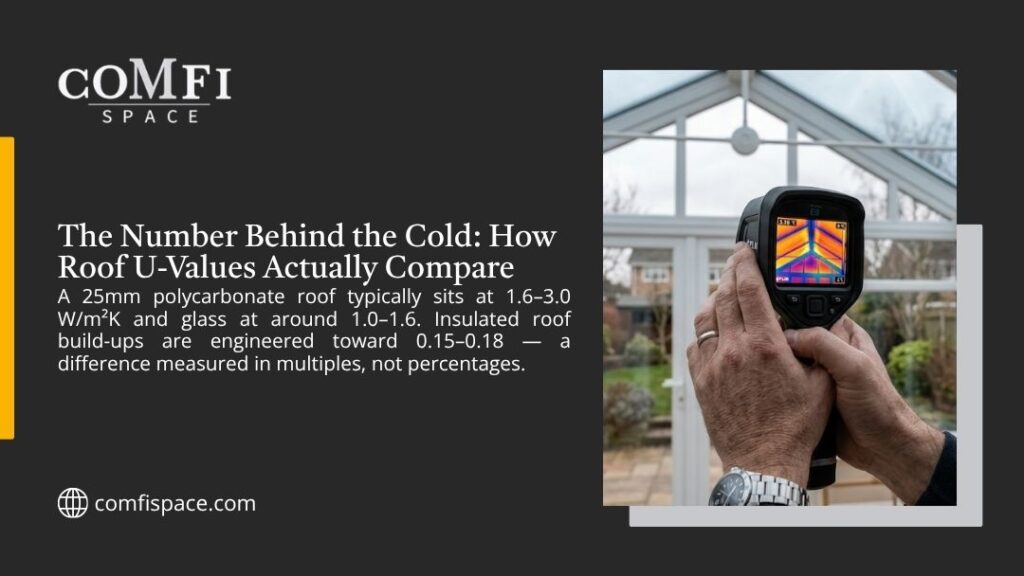
Conservatory roof insulation is designed to improve that balance. It helps reduce heat loss, improves thermal performance, and can cut down rain noise. It can also reduce condensation when the system is fitted properly, and the room has enough ventilation.
ComfiSpace keeps the solution deliberately simple: check the existing roof, fit insulated roof panels where suitable, reduce the uncomfortable temperature swings, and leave the homeowner with a room they can use again. No drawn-out project. No unnecessary extras. No need to make the job bigger than it has to be.
That is why the question is not only how long does conservatory roof insulation last. The better question is how long it can help you use the room properly.
If your conservatory has become a storage area, laundry space, or room everyone avoids, insulation may give it a real purpose again. The idea of how to make a conservatory usable all year round fits naturally here, showing how better temperature control can turn it into a space you actually enjoy using.
How to Extend the Life of Conservatory Roof Insulation
Good insulation should not need constant attention, but it should not be forgotten either. A few simple habits can help protect the system and extend the life of the roof.
Keep gutters clear so rainwater can move away from the conservatory. Watch for early leaks around roof edges, finials, wall plates, and panel joins. If you notice a drip, do not wait until it stains the ceiling or reaches the insulation. Moisture problems are easier to fix early.
Ventilation also matters. A room that is sealed too tightly can hold moist air, especially in winter. Opening vents, using trickle ventilation where available, and avoiding long periods of trapped humidity can help reduce condensation.
It is also wise to avoid drilling into insulated roof panels unless you have proper advice. roof fittings, blinds, rails, or fixings can all affect the finish if installed badly. A small hole in the wrong place may cause bigger trouble later.
Regular maintenance is not complicated. It is simply a way of protecting the investment. A conservatory roof does a tough job. It faces rain, frost, wind, sun, and extreme temperature changes. A little care goes a long way.
How ComfiSpace Helps Homeowners Get a Long-Term Result
ComfiSpace is a local company focused on conservatory roof upgrades across Sussex, Kent and Surrey. The brand is not trying to be everything to everyone. It specialises in one problem: conservatories that are too hot, too cold, noisy, draughty, leaky, or left unused.
That narrow focus is a strength. It means the advice can stay simple. The homeowner does not need to compare dozens of unrelated home improvement products. They need to know whether their conservatory can be made comfortable again, how much it will cost, and whether the work will be done properly.
The company says it has upgraded over 1,000 conservatories and offers an insurance-backed guarantee for peace of mind. More details about the local Sussex, Kent, and Surrey conservatory team are available in the About section.
Their process is also built for homeowners who do not want a hard sell. First, there is a quick chat. Then there is a free, no-obligation visit and quote. If the conservatory is suitable, the roof is upgraded with insulated panels, with most installations completed in one day.
That matters because lifespan depends on trust. A long-term result needs honest advice at the start. If the roof is not suitable, the homeowner should be told. If it is suitable, the solution should be explained clearly, without jargon.
You can also see real conservatory roof upgrades before you decide what might work for your own home.
FAQs About Conservatory Roof Insulation Lifespan
What is the average lifespan of a conservatory roof?
The average lifespan of a conservatory roof depends on the material. Older polycarbonate roofs may show age sooner, while glass conservatory roofs can last longer if the seals and frame stay in good condition. ComfiBoard insulated roof panels are designed as a long-term comfort upgrade for suitable existing conservatories and can often last around 20 to 30 years when fitted properly and kept dry.
Does roof insulation need to be replaced?
Roof insulation does not need to be replaced just because it reaches a certain age. It should be checked when there are signs of wear, such as damp patches, draughts, loose panels, musty smells, more condensation, or weaker comfort than before. In many cases, the issue may be a leak or failed seal rather than the insulation itself.
How effective is roof insulation?
Roof insulation can be very effective when it is fitted properly, and the existing roof is suitable. The best results come from a system that deals with heat loss, solar control, ventilation, and moisture. For homeowners who want comfort rather than a different roof appearance, ComfiBoard is designed to do the important job: make the conservatory warmer in winter, cooler in summer, quieter in rain, and easier to use all year round.
Can internal conservatory roof insulation last 25 years?
Yes, internal conservatory roof insulation can last 25 years in the right conditions. For ComfiBoard, the key factors are a suitable existing roof, professional fitting, and early attention to leaks or moisture. When those basics are right, it can be a long-term upgrade rather than a short-term patch.
A Warmer Room That Holds Its Comfort for Years
So, how long does conservatory roof insulation last? In many homes, a professionally installed system can last around 20 to 30 years. The real lifespan depends on the roof you already have, how well the insulation is fitted, and whether the space is kept dry and well maintained.
For homeowners, the bigger point is comfort. A conservatory should not be a room you avoid for most of the year. If it is too cold in winter, too hot in summer, noisy in rain, or affected by condensation, the roof is often the place to start.
ComfiSpace offers a simple, local way to upgrade an existing conservatory roof without turning the job into a major replacement project. For many homes, ComfiBoard can deliver the comfort people expect from an insulated roof at a fraction of the cost of a full tiled roof system.
If you live in Sussex, Kent, Surrey, or the nearby Home Counties, you can book a free, no-obligation conservatory roof quote and find out whether your conservatory can be made warmer, quieter, and more usable all year round.