

Yes, conservatory roof insulation can work very well when the existing roof is suitable, and the system is fitted properly. It can help make the room warmer in winter, cooler in summer, quieter in bad weather, and more comfortable from day one. In this article, we explore when conservatory roof insulation works, where it has limits, what affects cost, and how ComfiSpace helps local homeowners choose the right upgrade.
Does Conservatory Roof Insulation Actually Work?
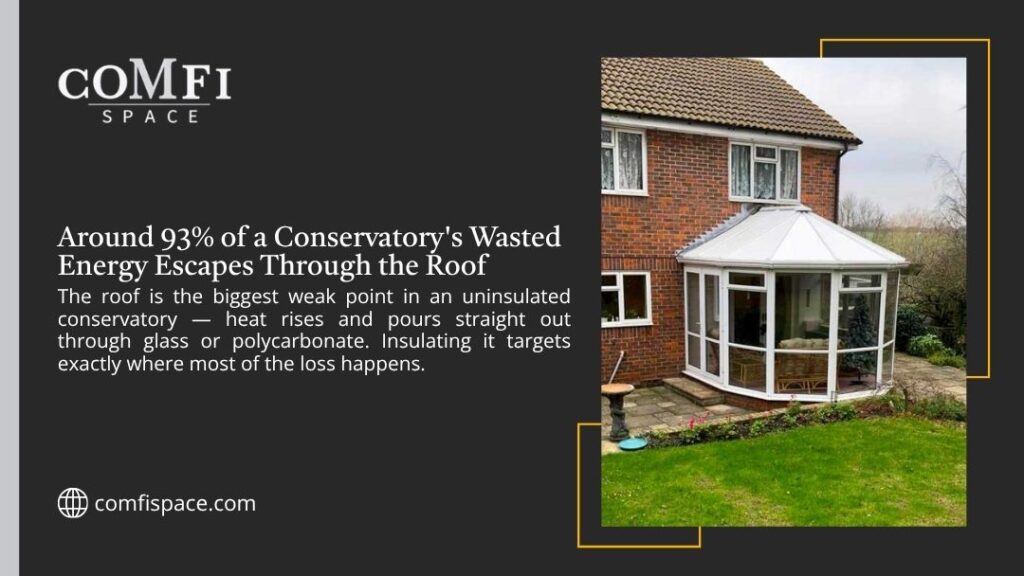
For many homeowners, yes. It works by reducing the amount of heat lost through the roof in colder months and limiting the amount of harsh sun that pours through the roof during warmer months. That matters because most older conservatories were never built to feel like normal rooms. They were often built with a glass or polycarbonate roof, which can let heat escape quickly in winter and trap too much heat in summer.
ComfiSpace’s experience with more than 1,000 conservatory upgrades shows the same pattern again and again: once the roof is properly insulated, homeowners usually notice the room feels more comfortable straight away. The aim is simple: less heat loss, less summer glare, less rain noise, and a conservatory that finally feels worth using.
Here’s the thing: conservatory roof insulation is not magic. It will not fix rotten frames, a failing structure, poor ventilation, or major leaks on its own. But when the existing roof is sound, and the main problem is comfort, a professionally fitted insulated conservatory roof can make a real difference.
That is the exact problem ComfiSpace helps local homeowners solve. The company upgrades conservatory roofs with insulated panels across Sussex, Kent and Surrey, usually without a full roof replacement. For homeowners who want a simple, cost-effective way to reclaim a wasted room, that local, no-fuss approach is the whole point.
ComfiSpace is not trying to make the job bigger than it needs to be. The product is designed to do what most homeowners actually want: get in, improve the room, keep the disruption low, and avoid paying for a full tiled roof when the insulation result can be achieved for far less.
Why Conservatories Become Too Hot, Too Cold, and Hard to Use
A conservatory can look lovely from the garden and still be one of the least comfortable rooms in the house. In winter, it can feel like the cold air has found every weak spot. In summer, it can turn into a greenhouse before lunchtime. When rain hits a polycarbonate roof, the noise can make the room almost unusable.
That happens because many conservatories have a large roof area made from glass panels or polycarbonate sheets. These materials let in light, but they do not always control heat well. Heat rises, so the roof becomes one of the biggest weak points. When the roof performs poorly, the room becomes hard to heat, hard to cool, and hard to enjoy.
ComfiSpace’s practical working estimate is that around 93% of unwanted energy loss in an uninsulated conservatory can happen through the roof area. By insulating that roof, the system is designed to capture around 80% of that loss, bringing the remaining roof-related loss down to roughly 13%.
There is no single official measurement for every conservatory because conservatories vary so much in size, age, glazing, position, and roof type. That is why ComfiSpace bases its advice on real installation experience and feedback from its 1,000+ customer base.
ComfiSpace explains that this common problem is often highlighted when looking at why conservatories get too warm in summer and too cold in winter. The issue is not that the homeowner is using the room wrong. The issue is often that the roof was never designed for year-round comfort.
How Conservatory Roof Insulation Works
Conservatory roof insulation works by adding a thermal barrier to the roof area. Instead of letting heat pass straight through the roof, the insulation slows that movement down. In winter, this helps keep more warmth inside the room. In summer, it helps reduce direct heat from above. The result is a room that feels steadier and more usable across the year.
A good conservatory insulation roof system can also reduce glare and soften rain noise. That is especially useful if the current roof is polycarbonate, because older polycarbonate roof panels can be loud during heavy rain.
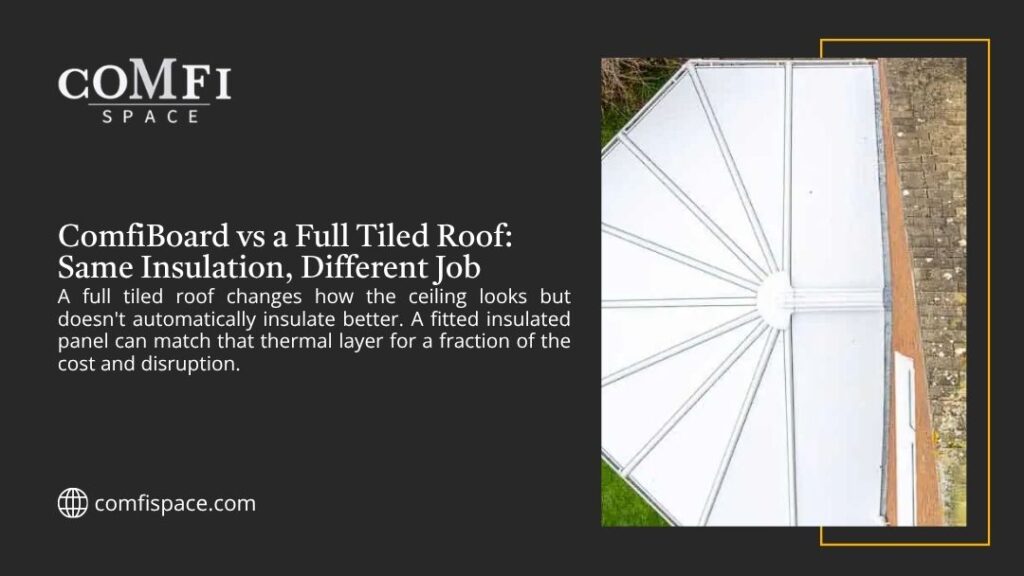
ComfiBoard is ComfiSpace’s own insulated roof panel system. It is not a plastered ceiling under a tiled roof, and it is not a heavy replacement roof. It is a direct conservatory roof upgrade that replaces the existing roof panels with insulated panels, giving homeowners the comfort benefit without turning the job into a larger building project.
That distinction matters. A full tiled roof and plastered internal ceiling can look different from the inside, but the insulation value is not automatically better. ComfiBoard is designed to give the same insulation performance as the insulated layer used beneath a tiled conservatory roof. The difference is appearance, disruption, and cost. ComfiSpace’s route is simpler, faster, and roughly half the price of many full tiled-roof alternatives.
What Changes Can You Expect After Roof Insulation?
The biggest change is usually comfort. A conservatory that once felt like a room for only a few weeks a year can start to feel useful again. That might mean a breakfast room, reading space, playroom, hobby room, home office, or simply a quiet place to sit.
Still, the result depends on the condition of the existing conservatory. Strong roof insulation for a conservatory system can help the roof do its job better, but the walls, doors, windows, floor, ventilation, and heating habits still play a part.
| Before Roof Insulation | What Conservatory Roof Insulation Can Help With | What May Need Separate Attention |
| The room feels freezing in winter | Better heat retention through the roof | Poor glazing, draughty doors, or no heat source |
| The room gets too hot in summer | Less direct heat and glare from above | Ventilation, blinds, and south-facing sun exposure |
| Rain sounds loud on the roof | A quieter internal roof feel | Very heavy rain or weak surrounding frames |
| The space sits empty most of the year | More regular day-to-day use | Furniture, lighting, flooring, and room layout |
| Heating the room feels wasteful | Less heat loss through the roof area | Energy bills still depend on use and home habits |
This is why a proper survey matters. A good installer should not just sell insulation for conservatories without looking at the roof first. They should check whether the existing roof, frame, seals, and layout are suitable.
With ComfiSpace, the first step is not a hard sell. It is a free, no-obligation visit where the team checks whether the roof is suitable and explains the best route in plain English.
ComfiBoard vs Full Tiled Roof Replacement
Many homeowners assume they need a full tiled roof if their conservatory is uncomfortable. In many cases, that is not true. A full replacement can be right if the roof is badly damaged or the homeowner wants a completely different look, but it is often far more than the job needs.
A full timber or tiled conservatory roof replacement should be treated as not less than £12,000 plus VAT, or £14,400 including VAT. Larger, more complex roofs can cost more depending on size, structure, finish, and access.
That is why cost comparisons need to be realistic. If a lower-cost alternative is shown too cheaply, it hides the real value gap between a full roof replacement.
ComfiSpace’s position is different. The company does not try to sell every homeowner a heavy replacement roof. Its system is designed for suitable conservatories where the homeowner wants the comfort benefit without the extra cost, longer disruption, and heavier project.
| Option | Best For | Main Advantage | Main Trade-Off |
| ComfiBoard insulated roof panels | Sound conservatories with comfort problems | Same insulation value as the insulated layer under a tiled roof, usually with far less cost and disruption | Different internal look from a plastered tiled-roof ceiling |
| Full timber/tiled roof replacement | Homeowners who specifically want a tiled-roof appearance | Different external and internal appearance | Not less than £12,000 plus VAT, or £14,400 including VAT, and usually a bigger project |
| DIY conservatory insulation kit | Short-term glare or light comfort issues | Low upfront cost | Risk of poor fit, trapped moisture, and weaker results |
| Blinds or solar film | Mild overheating and privacy concerns | Simple and non-invasive | Limited help with winter heat loss and rain noise |
ComfiBoard does the insulation job homeowners need at a fraction of the price of a full tiled-roof replacement. The tiled option may change the appearance more, but it should not be made to sound like it automatically performs better on insulation.
When Conservatory Roof Insulation Is Worth It
Conservatory roof insulation is usually worth considering when the room is basically sound but uncomfortable. If the roof is in decent condition, the frames are stable, and the main issue is temperature or noise, an insulated conservatory roof can be a practical fix.
It is also worth it when the homeowner wants less disruption. A major roof conversion can feel like too much when all you want is to enjoy the room again. ComfiSpace’s appeal is built around that exact frustration: local service, a straightforward product, and most installations completed in just one day.
This is also where the emotional side matters. A conservatory is not just a structure. It is space you already paid for. If it sits empty for half the year, it feels like wasted money. A good conservatory insulated roof helps turn that dead space back into something useful.
For homeowners across Sussex, Kent and Surrey, ComfiSpace’s local approach is a strong fit. The company is not trying to sell ten different home improvement services. It focuses on one clear job: making conservatories usable all year round.
If your conservatory is sound but too hot, too cold, or too noisy to enjoy, ComfiSpace can check whether a ComfiBoard roof upgrade is suitable. Book a free, no-pressure local quote and get clear advice before you spend money.
When It Might Not Be the Right First Step
There are times when insulating a conservatory roof should not be the first step. If the roof leaks badly, the frames are damaged, the base has moved, or the structure is not suitable for the proposed system, those issues should be addressed first.
That does not weaken the case for insulation. It simply means the roof needs to be right before any upgrade is fitted. A trustworthy company should say so clearly.
Poor ventilation can also cause problems. If warm, moist air has nowhere to go, condensation may still appear. Insulation can help reduce the temperature swings that often make conservatories uncomfortable, but the room still needs sensible airflow.
If the conservatory is in good condition, a ComfiBoard roof upgrade can be a simple way to make the room more comfortable without turning it into a larger project. If there are leaks, damage, or structural concerns, those issues should be checked first so the insulation can do its job properly.
Conservatory Insulation Cost: What Affects the Price?
Conservatory insulation cost depends on the size, shape, access, roof condition, finish, and product used. A small lean-to roof is usually simpler than a large P-shaped or gable-ended conservatory. A roof with awkward access, damage, or complex glazing will take more time to assess and quote.
That is why fixed online prices can be misleading. They might give a rough guide, but they cannot replace a proper home visit. ComfiSpace offers a free, no-obligation visit and quote, with a no-hard-sell promise. For a homeowner who is unsure whether to insulate conservatory roof panels or look at another option, that first visit is often the most useful step.
| Cost Factor | Why It Changes the Quote |
| Roof size | Larger roofs need more panels, labour, and time |
| Conservatory shape | Victorian, Edwardian, lean-to, P-shaped, and gable-ended roofs vary in complexity |
| Existing roof type | Glass or polycarbonate roofs may need different fitting plans |
| Roof condition | Leaks, damaged seals, or weak frames may need attention first |
| Access around the conservatory | Tight access can affect installation time |
| Finish and system choice | The final look, product type, and fitting method influence the price |
ComfiSpace’s cost advantage is simple: ComfiBoard gives homeowners the comfort benefit of an insulated conservatory roof without turning the job into a full timber or tiled-roof replacement. Those larger roof projects should not be presented below £12,000 plus VAT, or £14,400 including VAT. For many suitable conservatories, ComfiBoard keeps the upgrade simpler, quicker, and far more cost-effective.
Does It Help With Energy Bills?
Conservatory roof insulation can help reduce wasted heat, but it is best not to promise a fixed saving. Energy bills depend on how often you heat the conservatory, how open it is to the rest of your home, the condition of the glazing, and how you use the room day to day.
For ComfiSpace, the stronger and more accurate claim is comfort. After upgrading more than 1,000 conservatories, the common feedback is simple: the room feels warmer in winter, cooler in summer, quieter in bad weather, and easier to use from day one.
In many older conservatories, the roof is the main weak point. Glass and polycarbonate panels can allow heat to escape quickly in colder months and let too much overhead heat build up in summer. By replacing those panels with insulated ComfiBoard panels, ComfiSpace helps reduce that roof-level heat loss and makes the temperature feel more stable.
That does not mean every home will see the same impact on bills. A conservatory with old doors, poor glazing, draughts, or constant heating use will behave differently from a smaller, well-sealed room. The clearest benefit is that the roof is no longer working against the homeowner, so the conservatory becomes far easier to live with through more of the year.
Can You Insulate a Conservatory Roof Yourself?
You can find DIY ideas everywhere, from conservatory roof insulation searches to stick-on foil, thermal sheets, and conservatory insulation kit products. Some of these may help a little with glare or short-term comfort. But they are not the same as a properly fitted conservatory roof insulation system.
The risk with DIY is not just that it looks untidy. The bigger problem is what happens behind the surface. A poor fit can trap moisture, block ventilation, add stress to weak parts, or leave gaps that reduce the benefit. In the worst cases, a homeowner spends money, loses light, and still ends up with a room that feels wrong.
Professional installation is usually the safer choice if you want a lasting result. It gives you a proper survey, a tailored fit, a cleaner finish, and clearer accountability if something needs attention later.
ComfiBoard is not a stick-on sheet, a foil roll, or a temporary cover. It is a fitted insulated panel system designed for conservatory roof upgrades where the homeowner wants a proper finish and a real comfort improvement.
Does It Work on Glass and Polycarbonate Roofs?
Yes, roof insulation for conservatory spaces can work on both glass and polycarbonate roofs, but the approach may vary. Polycarbonate roofs are often the most obvious candidates because they can be noisy, draughty, and poor at temperature control. Glass roofs can also benefit, especially if the room suffers from glare, heat loss, or intense overhead sun.
A glass roof may feel brighter before the upgrade, so homeowners should think about how much natural light they want to keep. Some people prefer the cosier feel of an insulated internal roof. Others may want to plan lighting, décor, or window treatments at the same time.
ComfiSpace has separate information for homeowners with polycarbonate conservatory roofs and those with glass conservatory roofs, which is useful if you want advice based on your current roof type.
Why ComfiSpace Is a Strong Fit for This Job
ComfiSpace is a good fit for homeowners who want a clear, local answer rather than a complicated building project. The company serves Sussex, Kent, and Surrey and focuses on conservatory roof insulation, not a long menu of unrelated services.
That focus matters. When a business does one thing every day, it gets better at spotting common problems. It can explain whether the roof is suitable, what the finished room may feel like, and whether a full replacement would be overkill.
ComfiSpace’s message is simple: too cold, too hot, too noisy, or wasted space can often be improved with a clean insulated roof upgrade. The company offers free quotes, a no-hard-sell promise, and a local service rather than a national-chain feel. You can also view real conservatory roof upgrade examples before you decide.
For homeowners who only get one chance to fix the room properly, that matters. Nobody wants to pay for a solution that half-solves the problem. The right survey and the right product make the difference.
ComfiBoard keeps the offer simple because it focuses on the part of the conservatory that usually causes the biggest comfort problem: the roof. Instead of turning the upgrade into a larger replacement project, it helps improve warmth, summer comfort, and rain noise with less disruption and a more practical cost. For many suitable conservatories, that makes it a sensible way to get the room back into everyday use.
FAQs About Conservatory Roof Insulation
Is roof insulation worth it?
Roof insulation is worth it if your conservatory is structurally sound and the main issue is comfort. If the room is too cold in winter, too hot in summer, or too noisy in bad weather, conservatory roof insulation can be a practical upgrade.
It is less likely to be worth it if the roof is badly damaged or the structure needs major repair. In that case, a full replacement or repair-first approach may make more sense.
Does conservatory roof insulation work in summer?
Yes, conservatory roof insulation can work in summer by reducing harsh overhead heat and glare. It can make the room feel calmer and less exposed, especially during hot spells.
It still helps to use ventilation, blinds, and sensible room design. On very hot days, any glass-heavy room can warm up, but insulation can reduce the worst of the greenhouse effect.
Does conservatory roof insulation work in winter?
Yes, conservatory roof insulation can work in winter by helping the room hold on to warmth for longer. That can make the space feel less cold and easier to use.
The best results come when roof insulation works alongside good doors, decent glazing, controlled heating, and fewer draughts. If the roof is the biggest weak point, improving it can make a noticeable difference.
So, Is Conservatory Roof Insulation Worth Doing?
Does conservatory roof insulation actually work? Yes, for the right conservatory, it can be one of the simplest ways to turn an uncomfortable room into a usable part of the home again. It can help with winter cold, summer heat, rain noise, glare, and that frustrating feeling that your conservatory is wasted space.
It is not a cure for every conservatory problem. It will not repair a failing structure or make every glass-heavy room perform like a modern extension. But when the roof is suitable, and the system is fitted properly, conservatory roof insulation can be a smart, cost-effective upgrade.
The important point is this: homeowners do not always need a full tiled roof to get the comfort they want. ComfiBoard is designed to do the insulation job with less cost, less disruption, and a simpler installation. In most suitable homes, that is exactly why it works.
If your conservatory is too hot in summer, too cold in winter, or barely used for most of the year, ComfiSpace can take a look and give clear local advice. Speak to a Sussex, Kent and Surrey specialist and request your free local quote today.